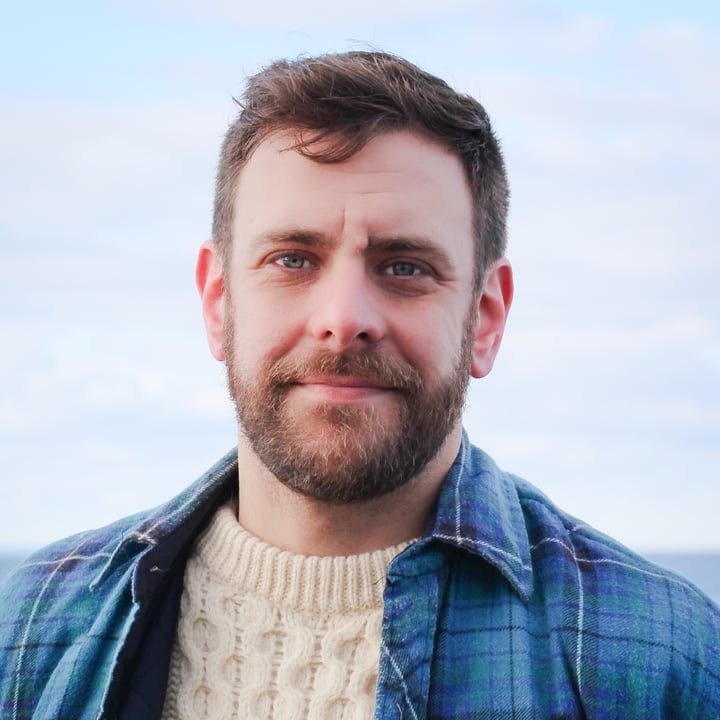
In February, I sat at my desk writing to two people that I had never met, trying to explain who I was and why they should let me run a small project on their land; I'm still not sure I found the right words for that letter, so in the end I borrowed someone else's: | "There are moments when the heart is generous, and then it knows that for better or worse our lives are woven together here, one with one another and with the place and all the living things." | The words belonged to Wendell Berry. | He died on Monday, at ninety-two, in his own house, in the Kentucky county where he was born. | In 1965, on the fourth of July, he left New York behind him and went back to tend to twelve acres on the bank of the Kentucky River near Port Royal. People told him it was the end of him as a writer. He'd been at Stanford, sharing ideas with novelists Ken Kesey, Larry McMurtry, and Ernest Gaines and had a bright future ahead for him in the city, if he wanted it. But instead, he went home, back to his roots. Over the next sixty years those twelve acres became a hundred and seventeen and he wrote forty-odd books there. | He wrote everything by hand. His wife Tanya typed the pages on a Royal standard they'd bought in 1956, and edited as she went along. In 1987, he wrote an essay explaining why he wasn't going to buy a computer, and the letters that came back at him were furious, as if refusing one machine were an insult to everyone who owned one. He stood steadfast in his belief "I do not see that computers are bringing us one step nearer to anything that does matter to me: peace, economic justice, ecological health, political honesty, family and community stability, good work". A lot to digest. | From his forties to today, he wrote a poem most Sunday mornings, walking outdoors rather than sitting in the pew, though he went to a Baptist church for years. In 1979 he was arrested at a protest outside a nuclear plant. In 2011, aged seventy-six, he found himself in a sit in at the governor's office, demonstrating against a mountain being blown apart for mining, and risked being arrested for the cause. He was someone who called himself, simply, a man who took the Gospel seriously, you can see that in his words but also in his actions. | In 1968, he wrote a poem about lying awake in the night, afraid for what is to come for his own life and his children's lives, in a country tearing itself up over Vietnam and its own assassinations, and going down to the water where the wild things live to find solace away from the troubles of grief. | There's an incredibly beautiful short film of "The Peace of Wild Things", illustrated by Charlotte Ager and directed by Katy Wang. Berry reads the poem himself, so you can hear it told as he intended for it to be heard. | Berry was a man skilled at finding hope blowing within the trees and faith in two inches of humus. Years later, he wrote the poem most people know him by, "Manifesto: The Mad Farmer Liberation Front", and the line they take from it is an instruction: be joyful though you have considered all the facts. He was asking for joy from people like us who had read the statistics, graphs and headlines. Never let it extinguish the joy of living. | Then, in his seventies, came a Sabbath poem that opens by admitting hope is hard, and harder as you grow old. Hope can't be allowed to depend on feeling good that day, it has to come from somewhere deep, the soil he tended and from the wellspring of the soul. It sits in a collection called Leavings, and readers pass it round as Berry's "Poem on Hope". Written by a man who had spent decades looking straight at a century he thought was going wrong, but who never looked away, and never gave up either. | I don't have a neat way to finish this newsletter. I just know I'll be outside again later today, I can hear the wood pigeon coo through my open window, and that feels like the right way to spend the time, thinking about a man who spent his life doing exactly that. | Warmly, | Rob | PS. As far as anyone knows, he never bought a computer. |
|