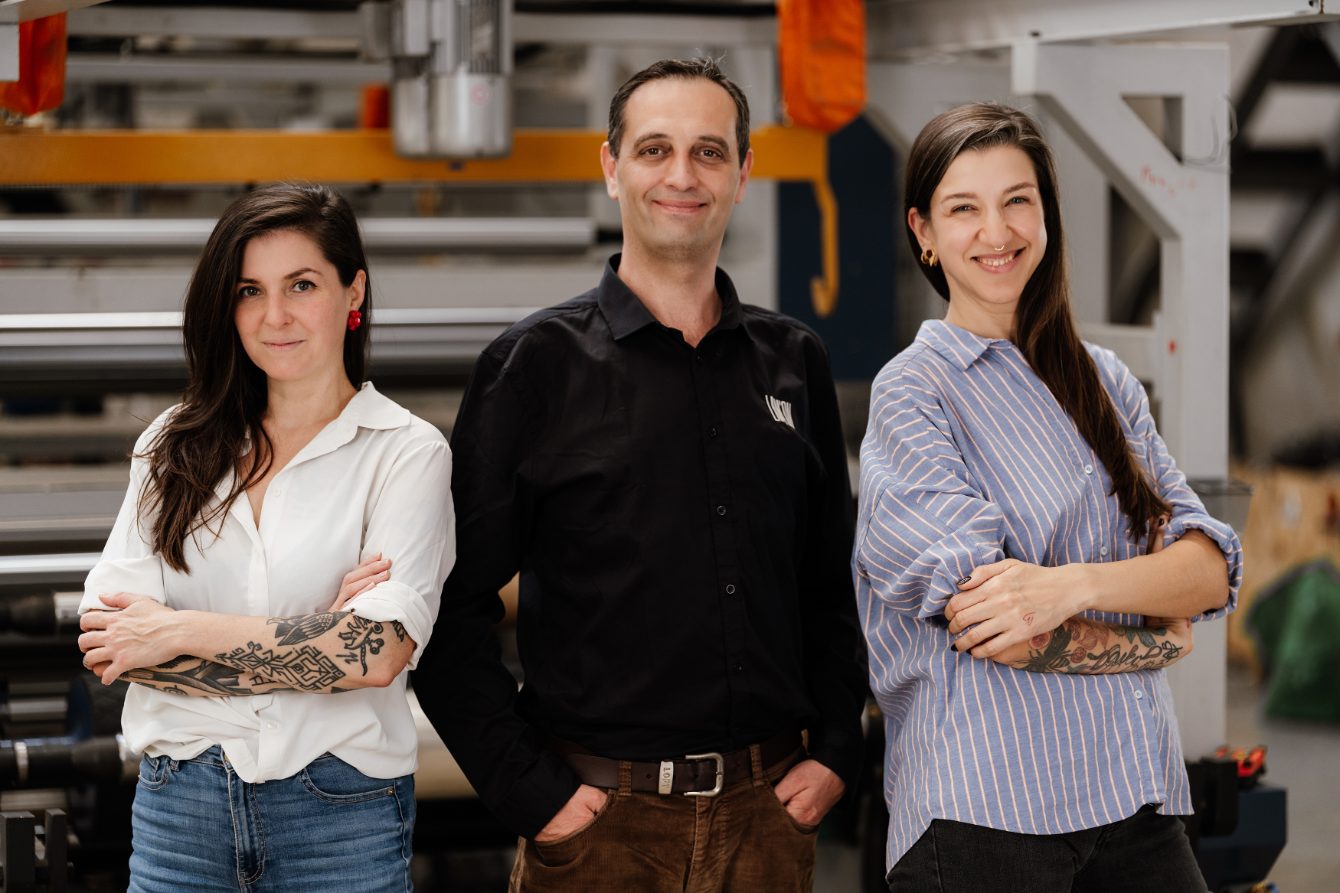
Hi 👋 | Seven years ago, two creatives in Sofia went looking for laminated film that behaved like plastic but without the harmful toxicity and waste. They couldn't find one anywhere. When I asked Gergana why they decided to make their own, she said: "I know it can be done better, and it's not being done better, so you might as well do it yourself." | And they did. One month ago, the film they spent seven years learning to make came off the conveyor belt with none of the company’s three founders in the room. They count it among their proudest moments. It may seem a strange thing to be proud of, until you know the story. | The company is called LAM'ON. Gergana runs the day to day, Angela looks after the business, and Filip is the scientist who took up the challenge to build something innovative. He'd spent years writing papers, and the trouble with it is that you research and write a lot but you never get to make anything in real life. He was excited to put his ambition to the test. | Neither Gergana nor Angela are scientists. They both came through print, Gergana as an illustrator, Angela in pre-press, and both were activists who kept having to laminate their own work in the very film they hated. | | They set out to produce laminating film (the glossy transparent layer you'd cover a menu with), except theirs was compostable. Using their film, a printer could laminate "on and on and on with a clear conscience", which is where the name comes from. In the end, the product never truly found its feet in a market that wasn’t ready for it. | So they pulled everything together into one focused direction. All the energy went into similar products that people were already seeking and by 2022 they were selling shrink film and mailer bags made from corn and sugarcane. These films compost in about six weeks, carry roughly two thirds less carbon than the plastic they replace, and importantly, they run through the machinery a customer already owns. | But getting there required enormous effort from the whole team. Bio-based material doesn't behave like plastic under heat, and shrink wrap experiences heat throughout the process, so for two years the film tore, or stuck, or came off the line destined for compost, and every failure got folded back in as a lesson. | Many months passed as they worked tirelessly on building their product. Each trial and lesson required a founder to be on the factory floor, watching, learning and adapting. There were days that felt impossible, but then, there was always hope. | Like every sustainability start-up, money has always been tight, and with the team's wages resting on their shoulders, their way of dealing with the pressure was to look at what's directly in front of them and simply, just keep grinding. "It's grit, definitely, and perseverance is what's been pushing us through," said Angela. | It takes a lot of effort to dig in and see the challenge through many obstacles and over several years. But some founders are people who look at a problem, decide it was theirs to solve, and keep showing up even though the product kept tearing and the market was waiting. | Recently, after many years of patience, the film is now being produced smoothly along the factory line, supervised only by their team. The founders can now stand back like proud parents, their idea was conceived through print, born in the factory, and is now walking. | Their film now wraps beer, vinyl records, candles, soap, socks and hemp, and their mailer bags carry parcels for small fashion and home-goods brands, with a fulfilment centre recently joining them. These are customers who care about the impact their parcels and products have. The cost is about twenty percent more than conventional plastic, less in some countries, which Gergana reckons makes theirs the cheapest compostable, bio-based option on the EU market. | So what’s next for LAM’ON? … Food packaging. | They're running in-house pilot tests now and aiming to be certified for food safety by the end of 2026. Beyond the growth, their mission still drives them. They aim to drag a whole packaging industry toward compostable materials, so the materials that LAM'ON makes stop being an unusual ‘alternative’ choice and start being the usual one. | The brand’s mission is ambitious, but isn’t that the point? A mission we all can get behind and cheer on. As Gergana said herself, “LAM’ON is a hub of hope and sustainability." What I greatly admire about LAM’ON is the tenacity, humility, and ambition of what they've been building, quietly, in Sofia. | In the beginning, they couldn't find the thing they wanted, so they made it. | If your business uses packaging and you're curious what a switch might look like, you can find LAM'ON at https://www.lam-on.com/. It’s worth a look. | Talk soon,
Rob | P.S. If your products ship in plastic and this has you feeling rather curious, reply and I'll introduce you to Gergana directly. Connecting people is exactly what I want The Salt to be for. |
|