I turned forty this month, which by one farmer's reckoning means I've used up my whole allowance of seasons to get things right. Luckily, I'm not a farmer. | The saying comes from a farmer Howard Buffett once heard at a conference, who said that "most farmers have 40 seasons to get farming right." That line stuck with Buffett, and it became the title of his book, 40 Chances. | On a farm, that sum is brutally simple. A field gives you one harvest a year. Say you try a new variety, sow a little earlier, or change how you treat the soil. You only find out whether it worked at harvest, and then you wait a whole year to try again. Across a working life, that comes to roughly forty tries. It's only a rule of thumb, but it does put things into perspective. | Life's all about experimentation, but farming has fewer rolls of the dice. And the next chance is going into the ground right now, from mid-October into November, farmers are drilling winter beans. Which brings me to some incredible folk who have given more than fifteen of their seasons to experimenting with pulses. | Back in 2009, Josiah Meldrum, Nick Saltmarsh and their farmer friend William were helping Transition Norwich work out how the city might feed itself. Out in the fields around Norwich, fava beans were growing by the acre, yet you'd struggle to find a single one in a British shop. The friends drew the obvious conclusion: "We assumed they must just not taste very good," Nick said. | So they tried cooking with them, making their own falafel and hummus, and found the beans were, in Nick's words, "delicious and versatile". Which left a better question. If nobody here was eating them, where were they all going? | They first assumed it went to animal feed. Then they asked a farmer they spoke to, a grower in Norfolk, what mattered most in his bean production. "Well, the biggest thing is when Ramadan falls," he said. He sold his beans to Egypt, where they're cooked as ful medames to break the fast, and his buyers wanted them light in colour and freshly harvested. A good share of Britain's beans was going overseas, while here, as Josiah puts it, "we've just fallen out of the habit of eating these beans." Finding that out, he says, "stopped us in our tracks, really." | So they tested the beans out on Norwich. They bought half a tonne of split beans bound for export, sat at a kitchen table and packed them into small bags, each with a postcard carrying a recipe and a prepaid side for people to send back their thoughts. Then they spread the bags around the city through community groups and local shops. "Initially there was a trickle," Josiah remembers, "and then it was a stream, and then there were hundreds of them coming back." | Hodmedods began one summer morning in 2012, with the three of them round a kitchen table, once again, packing beans for the Aldeburgh Food & Drink Festival. Their first base was up two flights of stairs in an old fire station, and carrying half a tonne of beans up and down the fire escape in the middle of the night was what finally made them sign the lease on a bean store (with no stairs at all). | Then came the lentils. People kept telling them lentils couldn't be grown here on any real scale, until some German lentil farmers they met told them to just plant them and see what happened. Trials started in Suffolk in 2015, and at the end of August 2017, the UK's first commercial lentil harvest began. | But it's chickpeas that really push the limits of their innovation. In 2017 Josiah admitted, "Chickpeas we've tried and so far failed, but we're not going to give up." Two years later, working with Henry Raker on Norfolk's Breckland soils, they brought in Britain's first commercial chickpea harvest. The second harvest made it onto Countryfile. As for the third year, well, in their own words: "Year three was a disaster." But in their new book, they say they're still persisting with them. If a farmer gets about forty goes, there will be some bad ones, best take it one season at a time. | For my birthday, my brother gave me Hodmedod's new recipe book, Whole Food. As someone who cares about where my food comes from, how it's produced and whether it tastes good, I can see this book becoming a well-thumbed addition to my kitchen. | It's rare to find a book of recipes that are all killer, no filler. I want to cook them all, from flamingo pea hummus to black bean and spelt jambalaya to poppy seed cheesecake. | 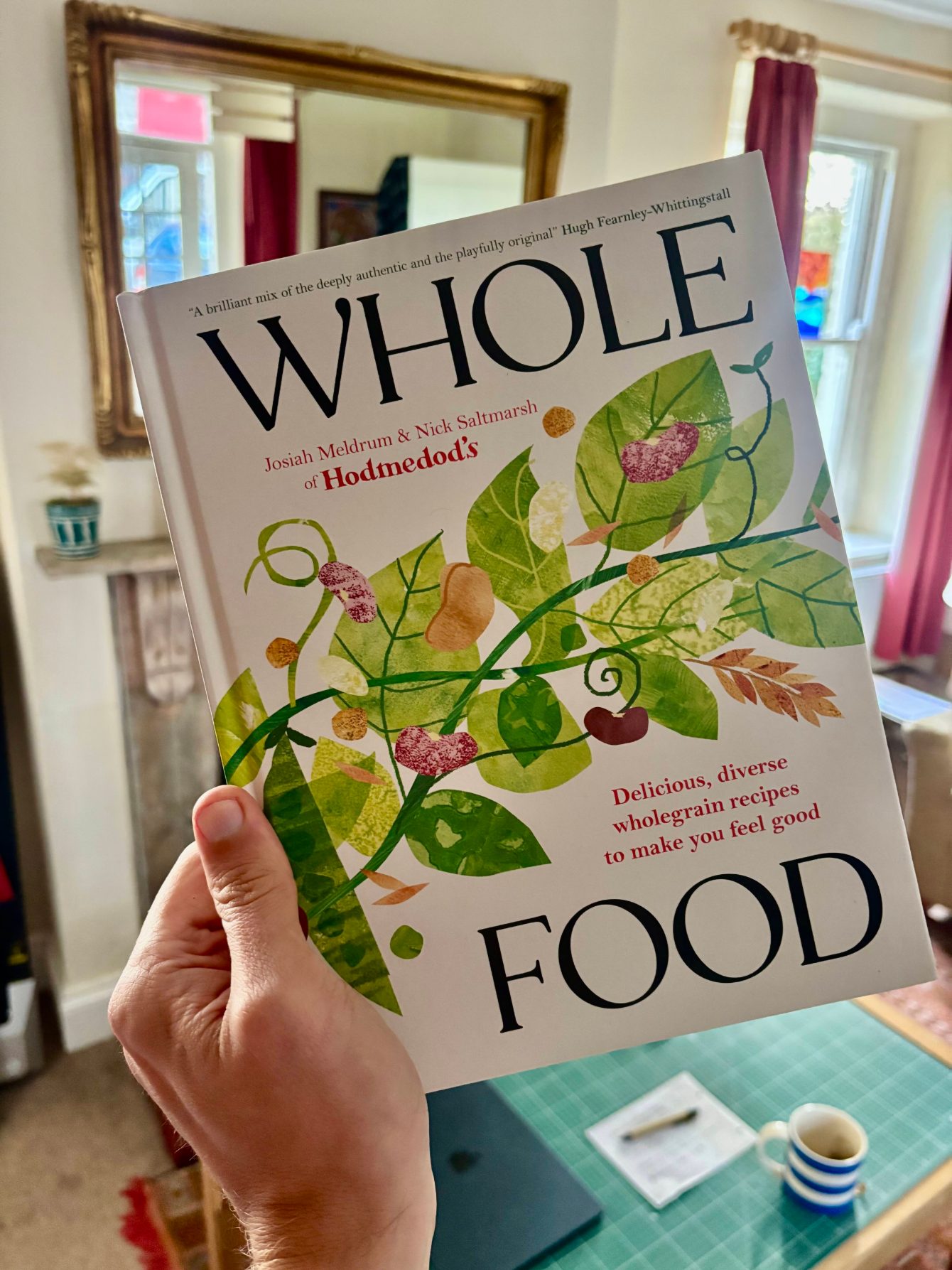 | Hodmedod's new recipe book Whole Food |
| These will be some of the first meals of my next forty, and I couldn't ask for a better place to start. I'll put the kettle on, warm a pan, and feel very grateful for the seasons still to come and the people I get to share them with. That's what turning forty feels like to me: whole food, a full table, and good company. | How very wholesome indeed. | As for why you haven't heard from me recently, I took a week off from the world for my fortieth. On the day itself, I went to the seal sanctuary here in Cornwall and had a mighty fine Cornish pasty, which is about as good a way to spend a birthday as I can think of. | Talk soon, | Rob | PS. Whole Food was published by Dorling Kindersley on 8 October 2026, and it's full of the beans, peas, lentils and grains sold by Hodmedod. You can find it here: Whole Food from Hodmedod |
|